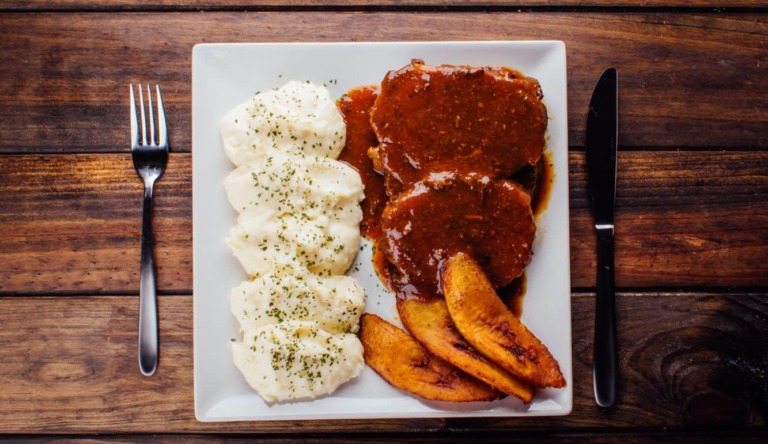
Asado Negro is a classic from the Venezuela cousine. The first recipe about Asado Negro was found in Caracas in 1861. This dish stands out for its bold, glossy, dark sauce and the melt-in-your-mouth tenderness of the beef. Its name — “black roast” — is a nod to the rich caramelized coating that gives it both its signature flavor and dramatic look.
Born from the fusion of Spanish colonial techniques and Afro-Caribbean flair, Asado Negro was traditionally a festive dish, reserved for meaningful gatherings — think Christmas, birthdays, or those big Sunday family meals that last all afternoon. It gained particular popularity among upper and middle-class Venezuelan homes in the 1800s and early 1900s.
What truly sets Asado Negro apart is its method: the beef is seared in melted brown sugar or papelon, creating a beautifully deep and slightly sweet crust. This base, enriched with aromatics, wine, and spices, becomes a velvety sauce that perfectly balances sweet and savory — a defining trait of Venezuelan cooking.
Panela, or papelón as it’s most commonly called in Venezuela, is a natural, unrefined cane sugar. It’s made by boiling and evaporating sugarcane juice until it thickens and solidifies into a dense, dark brown block or cone. Unlike white sugar, it retains all the molasses from the cane juice, which gives it a rich, earthy sweetness and deep caramel flavor.
It’s not just a sweetener — it’s part of the culture. Papelón is deeply rooted in traditional Venezuelan cooking, used in everything from drinks to savory dishes.


