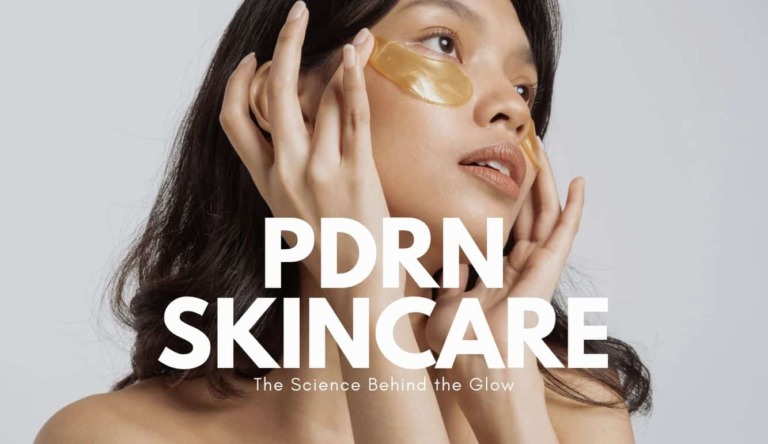
PDRN Skincare: The Truth Behind the Korean Beauty Trend
Korean skincare has introduced us to some fascinating ingredients over the years, from snail mucin to fermented essences. Now, another ingredient is attracting attention in the beauty industry: PDRN skincare.
Often described as “salmon DNA skincare,” PDRN has become a popular ingredient in Korean serums, moisturizers, eye creams and facial masks. Beauty brands promote its potential to improve hydration, support skin repair and encourage a smoother, more radiant complexion.
But does PDRN actually work, and can a serum deliver the same benefits as professional skin treatments?
Before adding another product to your skincare routine, here's what you should know about this increasingly popular ingredient.
What Is PDRN in Skincare?
PDRN stands for polydeoxyribonucleotide, a substance made up of DNA fragments that are traditionally obtained from purified salmon or trout DNA.
Although the idea of applying fish-derived DNA to your face might sound unusual, PDRN has been studied in regenerative medicine and wound-healing applications.
Its popularity in beauty originated largely in South Korea, where polynucleotide-based treatments became associated with skin rejuvenation and aesthetic medicine.
Today, cosmetic brands are incorporating PDRN into products designed for everyday skincare routines.
However, there is an important distinction between injectable PDRN treatments and topical PDRN skincare. They use different delivery methods, and their effectiveness cannot be considered equivalent.
What Are the Potential Benefits of PDRN Skincare?
PDRN has attracted interest because of research into tissue repair and skin regeneration. Yet many of its widely advertised cosmetic benefits still require more evidence from high-quality human studies of topical formulations.
1. Supporting Skin Repair
One of the most interesting areas of PDRN research involves tissue repair.
Studies involving PDRN-based treatments have reported promising outcomes in certain wound-healing applications.
However, these findings do not automatically mean that an over-the-counter PDRN serum can repair damaged skin in the same way.
For everyday skincare, the formulation and its ability to deliver the ingredient into the skin are particularly important.
2. Improving Hydration and Skin Appearance
Many PDRN skincare products are formulated to give the skin a plumper, smoother and more hydrated appearance.
It is important to remember that these products frequently contain additional ingredients such as hyaluronic acid, glycerin, panthenol and other moisturizers.
Consequently, improved hydration after using a PDRN serum may result partly or primarily from the complete formulation rather than PDRN itself.
3. Supporting Skin Elasticity
PDRN is being investigated for its effects on processes associated with collagen production and skin structure.
Early research is encouraging, but evidence is not yet sufficient to conclude that all topical PDRN products noticeably increase collagen or reverse skin ageing.
Consumers should be cautious about marketing claims suggesting that a serum can replicate professional regenerative treatments.
4. A Potential Addition to Barrier-Focused Skincare
PDRN products are increasingly marketed to people who want a gentler skincare routine focused on hydration and skin comfort.
Some formulations may be suitable for dry or sensitive skin, depending on their other ingredients.
Nevertheless, PDRN itself should not yet be regarded as a clinically established replacement for proven barrier-supporting ingredients such as ceramides, glycerin and petrolatum.
Does PDRN Skincare Really Work?
This is where the science becomes particularly interesting.
A 2026 systematic review examined seven randomized clinical trials involving 183 participants who received different polynucleotide or PDRN-based interventions.
The researchers reported encouraging findings in areas including wound healing, scar quality and aspects of skin rejuvenation. However, the studies were relatively small and involved different treatment approaches.
These findings should not be interpreted as proof that ordinary PDRN cosmetic serums provide the same results.
A separate 2026 study investigating a specific topical PDRN preparation reported promising results for the appearance of photoaged skin, including in a small clinical comparison with retinol.
Although this suggests that topical PDRN deserves further investigation, results from one specialized formulation cannot be generalized to every product on the market.
The takeaway: PDRN is a scientifically interesting skincare ingredient, but the evidence for widely available topical products remains limited. The quality of the formulation matters as much as the ingredient's name.
PDRN vs Retinol: Which Is Better?
PDRN and retinol are frequently mentioned together, but they are not interchangeable.
Retinol belongs to the retinoid family, which has a substantially larger body of research supporting its role in improving visible signs of photoageing.
PDRN is being studied primarily for its potential involvement in tissue repair and regenerative processes.
If your main goal is to address fine lines, uneven texture or sun-related ageing, retinoids currently have the stronger evidence base.
If you're interested in PDRN, it may be considered an optional addition to your routine rather than a replacement for established ingredients.
PDRN vs Hyaluronic Acid
Hyaluronic acid is a humectant, meaning it helps attract and retain water.
It is widely used in skincare products to provide temporary hydration and a plumper-looking complexion.
PDRN has a different proposed biological mechanism and is being investigated for potential regenerative effects.
However, if your primary concern is dehydration, a well-formulated moisturizer containing glycerin or hyaluronic acid is a more established starting point.
You do not necessarily need PDRN to achieve hydrated, healthy-looking skin.
Is PDRN Really Made From Salmon Sperm?
Traditionally, many PDRN ingredients are extracted and purified from DNA found in salmon or trout reproductive cells.
This is the origin of the viral nickname “salmon sperm skincare.”
However, finished PDRN is a purified ingredient, not raw salmon sperm.
The beauty market is also introducing plant-derived and biotechnology-produced alternatives that are often described as vegan PDRN.
Consumers should be aware that the evidence supporting these newer alternatives may differ from research involving traditionally derived PDRN.
If avoiding animal-derived ingredients is important to you, check the manufacturer's source information rather than relying exclusively on the product's marketing description.
How to Add PDRN Serum to Your Skincare Routine
If you're curious about trying a PDRN serum, keep your routine simple.
Morning routine
Evening routine
When introducing any new serum, patch-test it first, especially if your skin is sensitive or prone to irritation.
You should also avoid assuming that an unfamiliar ingredient is automatically safe simply because it is marketed as soothing or gentle.
Are There Any PDRN Skincare Side Effects?
The safety of a topical PDRN product depends on its full formulation, concentration and intended use.
As with other skincare products, possible reactions include redness, irritation, itching or contact dermatitis.
If you have a known fish allergy, ask a dermatologist or allergist about fish-derived PDRN products before trying them. Purification methods differ, and the absence of allergenic proteins should not be assumed.
Stop using a product if you develop a reaction.
Additionally, skincare products intended for topical use should never be injected or applied to broken skin unless specifically approved for that purpose and administered by an appropriately qualified professional.
What Should You Look for When Buying a PDRN Serum?
Not all PDRN skincare products are created equal.
Before purchasing, consider the following:
A higher price or a larger advertised PDRN percentage does not automatically guarantee better results.
Is PDRN Skincare Worth the Hype?
PDRN is one of the more interesting ingredients to emerge from Korean skincare in recent years.
Its background in regenerative research gives it a scientific foundation worth following, while new topical studies are beginning to explore how particular formulations may affect the skin.
Still, enthusiasm should be balanced with realistic expectations.
For consumers who already have a consistent skincare routine, a well-formulated PDRN serum may be an interesting product to explore.
But if you're building your skincare routine from scratch, gentle cleansing, moisturizing, daily sun protection and appropriately selected evidence-based active ingredients should remain the foundation.
The future of PDRN skincare looks promising, but it is not yet a miracle ingredient.
And perhaps that's the most useful lesson from every new skincare trend: understanding what your skin actually needs will always matter more than following the latest viral product.
Good To Know:
What does PDRN do for your face?
PDRN is being investigated for potential effects on tissue repair and skin structure. Cosmetic products containing PDRN may also improve the appearance of hydration, although these effects can depend on other moisturizing ingredients in the formula.
Can PDRN replace retinol?
No. Retinoids have a more established evidence base for treating visible signs of photoageing. PDRN should not be considered an equivalent replacement.
Can you use PDRN every day?
Some topical PDRN products are designed for daily use. Follow the instructions for your specific formulation and discontinue use if irritation occurs.
Is PDRN suitable for sensitive skin?
Some PDRN formulations may be suitable, but suitability depends on the full ingredient list. Sensitive skin can react to preservatives, fragrances and other ingredients even when the featured active is marketed as gentle.
Is vegan PDRN as effective as salmon-derived PDRN?
There is currently insufficient comparative clinical evidence to conclude that vegan and fish-derived PDRN formulations produce equivalent results on human skin.
How long does PDRN skincare take to work?
There is no established timeframe that applies to all PDRN serums. Hydration-related cosmetic improvements may appear sooner than structural changes, and claims of long-term regeneration require appropriate clinical evidence.
The following studies provide scientific background on PDRN and its potential applications in dermatology.
1. Polynucleotides and PDRN in Skin Rejuvenation and Wound Healing (2026)
A systematic review examining clinical research on polynucleotide and PDRN treatments, including skin rejuvenation and wound healing.
Read the study
2. Topical PDRN and Photodamaged Skin (2026)
Research investigating the potential effects of a topical PDRN formulation on photoaged skin.
Read the study


