GARY TALBOT FIRST IRISH FACE

GARY TALBOT FIRST IRISH FACE

Top Model Gary Talbot

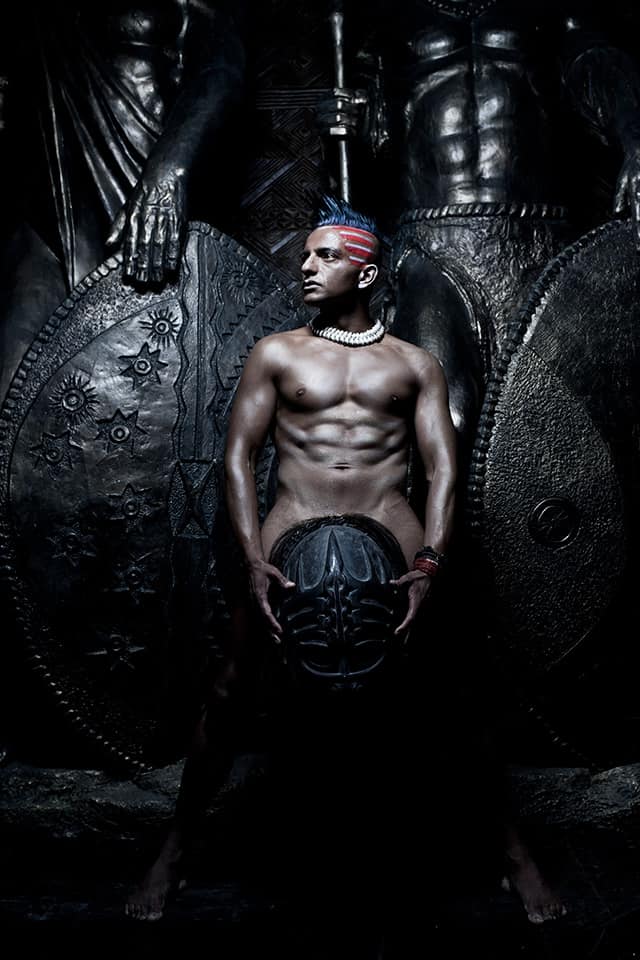
Gary Talbot is the very first Irish model. He is originally from Ballyfermot, Dublin and he is one of the leading models from Ireland. He was discovered in 2012 by Supermodel Tyson Beckford. Gary works with the top fashion brands such as Versace, Rag and Bone and Tom Ford, Gary has walked the runway in London Fashion Week and New York Fashion Week, and has a string of editorials and campaigns to his name. But behind his remarkable good looks and strong cheekbones, there is a person who knows exactly what he wants and he knows exactly how to get it. We had the opportunity to talk with Gary and discover more about how his career started and what his goals are.

Tell us a little bit about you.

I'm 24 from a part of Dublin known as Ballyfermot. I love to spend as much time as possible with friends and family and just take each day as it comes.

When did you know you wanted to be a model?

I actually never wanted to become a model it just happened but from the moment I started, I loved it. It's strange I found my dream job without even knowing what my dream job was which I'm very thankful for.

How were you discovered?

I was speaking to supermodel Tyson Beckford on social media pages and he met me in person then all of a sudden I was a model. Nothing seemed planned or arranged it just happened and started me on this crazy journey.

What do you like to do when you are not working?

I try to see as many people as possible with having a strange schedule where your never certain about where you'll end up it's important for me to make time for my friends and family. I love going on walks and just enjoying as much in life as possible.

What advice would you pass along to those starting out in the business?

Just be yourself and enjoy everything it's a hard industry and you can only do your best don't focus on the negative or run ahead of yourself take it all in and have fun with it.

You have become successful for many reasons- what do you think the top few are?

I think the first big thing for me was becoming the first Irish male model to walk in London fashion week that really changed things. I had two features with British vogue that was a huge deal for me to get that in less than a year of my career Iv no regrets to any job Iv done Iv experienced so much and still learning as I go on.

What is the ultimate goal of your career?

I want to be a voice for upcoming talent in fashion I think it's important for teens to have someone as a guide and for them to see that dreams can come true that the world hold so many amazing opportunities for you that would be the icing on the cake for me.

What has been your favorite modeling experience so far?

Everything from fashion week to the very beginning the people I get to meet and the people I get to work with make it all amazing Iv loved everything so far.

In which project are you working right now?

Iv got a few things happening right now we have magazine features one coming this month and two others in January followed by a campaign for Marc Coblen watches then I really want to look into other aspects of the industry Iv big plans.

Tell us a bit about Men’s fashion Ireland

I set men's fashion Ireland up as a platform to showcase talent in the industry and give people a place to post and network with each other to further their careers I myself have not put much time into it we have a team behind the scenes pulling the strings stylist Deborah Bux is one of the editors and Jay Kambala they have two very different looks on fashion which gives an interesting read and more variety on opinion. In the new year, I'll get more involved and give my tips and tricks to others.


GLAMOUR MAGAZINE EDITOR IN CHIEF – HUNGARY

GLAMOUR MAGAZINE EDITOR IN CHIEF – HUNGARY

Glamour Magazine Hungary

Glamour magazine, is published by Conde Nast publication. Founded in 1939 in the United States, today Glamour Magazine is now published in more than 15 countries including Hungary and is publish by Ringier Axel Springer, we talked to Krisztina Maroy Editor in Chief of Glamour Magazine Hungary, to find out how she made her way to the top, and what she thinks about fashion.

What your dream job was when you were a child?

I wanted to be a journalist from the age of 12. I said it to everyone who asks me what I want to be when I grow up. I imagined journalists are sitting in coffee shops, smoking, talking, they are very artistic, well connected and they are creating something extraordinary every day. Of course this romantic or much rather dark romantic vision is quite far from reality, especially that I did not become a „serious” journalist as I was from my early childhood very attracted to clothing and fashion as well. This two was my main interest and it will stay for a lifetime, I guess.

Did you always know you wanted to be in fashion?

Yes. I grew up in a so-called communist country, so fashion wasn’t a very live issue, but my grandmother had a women’s tailor shop where they created basically haute couture clothes for wealthy women of the countryside. I loved to watch the women in front of the huge, golden mirror and these pictures will always be in my memory. Women in their beautiful, new clothes. They are always magical for me and life-affirming.

How did you find fashion? Did you buy magazines?

My grandmother had Burda, L’Officiel, few Vogue magazines already in the ’80s. Anyone who traveled out of the eastern block had to bring a new one, that was the way to have the newest inspiration for the salon. All the ladies were choosing their own dresses, outfits from these magazines. She made the pattern by herself which is real work and she had great talent in that, although Burda had the patterns she changed them to make the creation more special. I remember I was telling her what kind of clothes I would like and she drew them and then she did the pattern. I made her draw crazy stuff and she didn’t mind. She only said, if you will wear this, they will think you are crazy. I said I don’t care! I was watching the magazines again and again and I found some parts inspiring and some other boring and I thought it could be much better done.

What was your first internship?

I started to work before any internship. I was 23, still at the university and I became the fashion editor of a Hungarian title, that time the poshest one, called Elite. I learned how to edit on the way, although as I said, it is something instinctive with me. I learned a lot as a stylist, as a photographer’s assistant, at the university studying literature and aesthetics, so basically my life was studying and it is still. I was an intern in 2002 at British Vogue which made me think differently again. When you see how the best magazine is done you feel, yes, it worth getting up every day and try to be better and better. It was amazing that some of the people there are very down to earth and that is why they became my role models for a lifetime. If you are the best it is one more reason to be relaxed and kind, right?

What is the role of Editor-in-chief?

You still have to be an editor of all the sections of the print magazine and the online magazine, but you always have to be ahead and show the direction, see the future, feel what the people are interested in, what will be the next big thing, what worth to cover. You also have to be a very stable background for the editorial team, morally, artistically. You always have to fight for the better with yourself, with your colleagues and in the meantime be aware that just like you, they are creative, very sensitive people. It is a very complicated role and takes a lot of energies to deal with people all the time, every day. 

Tell me what an average day is like for you when you're working at Glamour Hungary?

There is nothing like an average day. I like to change and I feel that a routine is killing creativity. Average if I am in the office, but what I am doing is not average. I don’t like numbers, that is the hardest part of my job, that I have to deal with them once in a while. I love visions, I love outstanding people, positive energies, so I try to make every day different.

What advice would you give to someone who wants to start a magazine?

Be a hard worker, be open, try new ways and never think that you are ready and you know it or you know how because that is the moment you will be unsuitable for the job in fashion.

What goals do you wish to achieve in the future?

Make fashion more obviously the part of our culture in Hungary, to stay creative.

What trends are you loving right now?

I love the garments made using new technologies, new fabrics as laser cut, laser print, light laser-cut leather for spring and summer. I love when old boundaries disappear. I like when fashion makes you more comfortable while you are chicer and when fashion makes your life better, easier.

Which trends do you want to see disappear?

I believe that wide choice is better than limited possibilities. The goal is to help people to choose the best for them. I would never wish a trend to disappear, much rather think about why it appeared.

What's the best style advice you've received?

„You deserve it!”

Who is your favorite designer? Why?

I can’t really have a favorite and it is changing from season to another. Let’s put it in a different way: Michael Kors is a genius in basic pieces and it is very easy to build a prospering wardrobe with his brand. Karl Lagerfeld can sell anything, Miuccia Prada is a genius. I love Burberry forever and I think Christopher Bailey is a class, I want everything from their collection. Also, I think H&M is the most modern high fashion company in the World. I love that Hungarian designers start to show themselves in the international markets. Watch out for Dora Abodi, Napsugar von Bittera, Use Unused, Nanushka, Kata Szegedi and more. You all have to buy from them when you visit this beautiful country!

What styling advice would you give other women?

Focus. Don’t get puzzled by the thousands of trends. Get the basic pieces of the season and depend on them. Invest in very good quality garments and change the bits and pieces to refresh the look again and again. You have to find a good balance in life and in your dressing between stability and change. I believe that is one of the keys to happiness.


MILLINER LOUIS MARIETTE THE HEART BEHIND THE DESIGN

MILLINER LOUIS MARIETTE THE HEART BEHIND THE DESIGN

Milliner Louis Mariette

Milliner Louis Mariette is the epitome of perfection and elegance. Louis was co-host of the BBC’s coverage of Royal Ascot. His passion and eye for detail make him a successful milliner. But Louis is more than just a milliner; he is a wonderful person, with a big heart, always working for a noble cause and all this with his feet placed firmly on the ground.
I must say, I enjoyed doing this interview with him. Not only did I get to talk with the milliner to the superstars, but I also got to know a wonderful human being.

Louis was born in Malawi and grew up in Botswana and Swaziland. With nature as his playground, Louis would spend endless hours exploring the flora and fauna, collecting everything from semi-precious stones, seedpods and cactus flowers to beads and trimmings from local tribes. Traveling as a child, Louis experienced the contrasting world and bright lights of London and was especially inspired by its glamorous café society. This, combined with the incredible palette of colors and textures found in the wildlife of Africa, became the central focus of Louis’ inspiration and is brought to life through the exotic elegance of his designs today.

Based at his atelier in London, Louis is a self-taught milliner and has been breaking boundaries with his designs for eight years. Having previously worked as a party and wedding planner, his first show was in Milan in 2002, commissioned by renowned stylist Michael Dye, which gained Louis high praise and recognition. He was soon approached by Harrods to design one of his most spectacular creations, the ‘Chapeau d’Amour’, a $2.7 million hat made from a rare weave of platinum fabric studded with diamonds, for their newly refurbished hat department. Louis has been the official milliner at Investec Derby horse races where Erin O’Conner was the face of the event. He custom made a beautiful hat for the occasion based on the Lilac-breasted Roller Bird, one of his favorites in Botswana.
Additionally, he co-hosted the BBC fashion commentary with Suzi Perry at Royal Ascot for their 200-year celebration.
Louis has proudly supported the Children’s Trust for over 12 years. In that time he has been Vice President, fundraised, created awareness through publicity, organized millinery demonstrations with his team for the children, run numerous marathons and even trekked Mount Kilimanjaro for them!

How did launching your brand change your life?

My life actually changed a remarkable amount. I used to work for somebody else. Working for yourself, you have the freedom to make decisions, and you get to choose the direction you want to go, and I love that.
My clients rarely give me tight specifications and they always allow me an element of creative freedom, usually asking me what I think would suit them best. It's lovely to feel valued and trusted and is flattering when you get the opportunity to work with people like that.
I value the importance of collaborations. I have been fortunate to have worked alongside some of the world’s most prestigious companies and brands as well as talented and creative individuals such as photographers, stylists, makeup artists, and hairstylists.

What is a normal day for Louis Mariette?

I wake up every day at 6 am to go jogging or to the gym. I love the freedom I feel when I run. I have been running since I was a child, it’s a good kick-start to the day and gets all the adrenaline and endorphins pumping! I think it’s important to get a bit of exercise in our lives. As soon I have done my exercise I go directly to the atelier; my first moments of creativity are normally in the morning.

Where do you get your inspiration?

My favorite thing is when I travel to an exotic country. I pack all my tools, sketchpads and a few bits of millinery equipment. Early morning, when the sun is rising, you get to experience the crisp freshness of the day and I always feel the light is at its best; this is when the full force of imagination is released.

When did you know you wanted to be a milliner designer?

My career began in hotel management, for many years I worked in different hotels, and then I started my own business, which was party planning, and sometimes you don’t plan anything in particular.
One time when I was planning a party, and I made a matching pieces for the head, one friend of mine Michael Dye, who is an amazing Creative director, ask me to make some pieces for a Fashion Show he was organizing.
I love the motive which was Orient Express in 1950, and I was agree to make the pieces, and it was a wonderful experience for me, where I got to fly to Italy and had an exposition.
Everything happens so fast, it was something it wasn’t plan, and when I came back, after talking with a dear friend of mine, I was convince, I have to drop everything and dedicated myself to the Design & millinery business. And one of the things I love about my work is how flexible I can be.

How did you get started in the fashion world and what would you recommend to a person who wants to get into this industry?

In any career you go into, it’s all about you as an individual. You have to be dedicated, motivated and work exceptionally hard. I think the fashion industry is a particularly good example, because of how large and diverse it is. Initially, some think it’s just about being a fashion designer but when you have a business there’s so much more to it: press, marketing, collaborations, diversifying and expanding your brand are just a few of the factors involved. You’ve got to think outside the box and be innovative. Also, since I’ve started the business, there’s been a lot of development of technology and social media. This seems to be a whole new platform to expand your business through exposure and new forms of communication.
My advice to anyone who wants to get into this business is that if you don’t knock at the door you will never get an answer. It is important you identify what your passion is because there are so many different areas of fashion to explore. You have to be a perfectionist whilst also getting it right the first time. It is really difficult to build back your brand if you give the wrong impression the first time. That first image is what people are going to remember.

For more information please visit: Louis Mariette


Photo Credits:

Philip Volkers

Gemma Reynolds

Camille Sanson


FROM MUSICIAN TO PHOTOGRAPHER

FROM MUSICIAN TO PHOTOGRAPHER

Fashion Photographer Lance Burkitt

Lemontrend speaks with Lance Burkitt, a Celebrity & fashion photographer and the owner and editor of Ascendance Magazine, to discuss his personal and professional transformation from a musician to a celebrity and fashion photographer and what is the concept behind Ascendance Magazine.

Can you tell us about yourself and how you got started in photography?

I have always been a creative type. I was a musician before damaging my ears in the late 1990s. I messed around doing regular day jobs for a few years but missed the creative buzz that being a musician gave me. I fell into photography by accident, although I have always loved taking photos; I’d never thought about doing it for a living. It gave me back the creative outlet that I had lost after retiring from music.

How would you describe your work to someone who has never seen it?

Quality, interesting, real, technical, honest.

At what point did you realize that photography is what you wanted to do as a career?

Within a few months after getting my 1st real camera in my early 30’s I’d decided to open my studio and begin photographing people. It was at this point I realized how much I loved it and wanted to pursue it as a career.

What are the biggest challenges of working in the United Kingdom?

Being based in the North of the UK is one of the biggest challenges. Most of the real action happens in London and getting clients to come north is extremely difficult. It is often impossible for me to get to them in London too. I miss out on a lot of opportunities because of my location, but it is just not feasible to move south. Getting people at the top (Editors, agents, decision-makers) to give you a minute of their time is also quite a challenge.

Your projects are a collaborative process. Tell us what it is like always to be working with new stylists, models, and designers.

It’s exciting, challenging, and when I work it is quite liberating. I do use a regular team of creative people who I trust; that’s very important to me. Occasionally I will bring in new people, but I try never to bring them in on a photo shoot where the final images matter, so I tend to do that for test shoots. Models are the unknown factor. Most models are extremely good at what they do, occasionally though a model can be hard work for some reason, which is when things can get a little tricky. It is my job as a photographer to get the best out of the model; to get what I or that the client wants. If I can do that then the images will pretty much shoot themselves, if I can’t then it can be a real struggle to get anything usable from the shoot.

What kind of impact do you hope to make in the fashion world in the next 10-15 years?

I hope that the quality and style of my images will win out and that the right people in the right places will begin to notice that I am doing. I would like to think that in 15 years' time people may speak my name in the same vein as Mr. Bailey and co, but we will just have to see.

What does fashion mean to you?

I photograph fashion, which means I don’t have to partake in it outside of that, luckily. I am no fashionista! I am happy with jeans and a t-shirt. So you could say to me fashion means I get to be creative, it’s my job, my vocation. Without fashion, I may end up just being another wedding photographer, or not…

What projects are you working on now?

I am currently working on producing some fashion sets for the magazine using locations. If you look at the location work of Mario Testino, you won’t be far away from what I am trying to achieve.

How much equipment do you typically bring to a photo-shoot?

Minimal if I can. If I’m on location, I’ll take a camera or two, perhaps a flashgun or a few portable lights. If it’s a studio shoot then, I would have all the equipment needed for that, including various lights and modifiers, but generally speaking, I travel light. I rarely use assistants; I enjoy doing my stunts.

What photographers from the past or present have influenced you the most?

My biggest influence would be David Bailey, especially his portraits. I always thought that if I could get people to give me what they give him, then I would be a success. I also love the advertising work or Richard Avedon; he was a genius at that. Mario Testino’s work is also very real; I like that about his work.

What makes a great fashion photograph?

Everything in the image needs to be right, not perfect, just right. You need to have the right model, the right pose, hair, makeup, styling, location and of course lighting and composition. If you fail on any one part of that, the photograph is pretty much useless. But in the end, without a great photographer, you cannot have a great fashion photo.

Tell us about your magazine

Ascendance magazine was born out of my frustration at the lack of publication opportunities being offered to amazing but as a yet unestablished creative talent, especially in the north of the UK. So I decided to start a magazine myself to fill that gap. It is still in the early stages, but it is going in the right direction. Whatever happens with the success of the magazine, I will ensure that it always remains true to the reason it was created.

What is the difference between your magazine and the rest?

Ascendance is simply a publishing platform for up and coming talent, from models through to writers. Other more established magazines tend to not take this kind of risk, and will only employ people already established (And well published) in their field. We have no agenda, other than to publish quality work. We are not endorsing anything, other than the magazine, so we don’t have to use a known face to publish it. We specialize in Fashion, Beauty and portrait images and the stories of those we photograph.

What sort of message do you want to spread with your Magazine?

There is so much untapped creative talent out there. People just need to be given a place where they can view and enjoy it. That is what Ascendance Magazine was created for.

For more information visit: Lance Burkitt and Ascendance Magazine

BEHIND THE LENS

BEHIND THE LENS

Freelance Fashion Photographer London

Vanya is a freelance Fashion photographer from London, within his work, you can find Fashion editorials and catalogs. His inspiration stems from Photographers such as Breton, Penn, Alvedon, Bailey, Lategan, and Donovan. He was always fascinated by the play of the light and dark, strong contrast, the subtlety of shadows and the main effects one could achieve with a simple image. We could not miss the opportunity to talk to him and discover how this creative photographer starts in the world of photography and why he becomes a photographer.


When did you first get interested in photography? What sparked it, and when did you decide that it was what you were going to do?

I picked up a camera when I was about 8 years old and always thought it was magic, the way you could capture a moment of time in a box and then a week later get the film processed and Shazam! There you have a picture for all of eternity!

Were you educated in photography, or are you self taught?

I went to art college; I wanted to paint, but always took pictures along the way. I guess after I realized taking pictures was a much more viable way of paying the bills, I decided to follow that route. The whole practice relates anyway; it's just that taking pictures is painting with light instead of a brush.

I then went to assist various photographers and studios and that’s where I learned my trade, so I’m self-taught to a certain degree, but I certainly acquired most of the practice in studios and working with other Photographers. I would recommend anyone who is starting in the industry to go the same route.

What camera do you use the majority of the time?

I shoot on Nikon most of the time, Hasselblad with a P65 back when I can (budget permitting) and film, either 120, or 5/4 whenever I get the opportunity… just love the whole process on that front.

You mostly focus on fashion photography. Once you’ve mastered this, are there any other types of photography you’re looking to move into?

Yeah, I shoot fashion and some still life... I like street photography and have taken loads, I’ve just not put them on my site, because I think they need another platform to work off of... I also like architectural photography and saw a brilliant exhibition recently at the Barbican Gallery, it was so cinematic. I’ve recently started making films and have a production company which should be online in the next couple of weeks. We are concentrating on Fashion and Music Videos. I also love documentaries and recently shot one about Walthamstow and art in the community. I examined how the area has changed and argued how art within a community can improve the quality of life, well-being, and cultural integration. It was an amazing experience and gave me a real insight into how art influences change and the spirit of a place within the community.

Comparing where you are now with where you are when you first started, what could you have done differently to get to where you are sooner?

I wouldn’t have done anything differently, I guess I believe in fate.

You’ve clearly worked with a wide range of models, what tips can you recommend to people looking to expand their portfolio?

I work with models through agencies... I think it's really important to get to know them before sticking a camera in their face no matter how experienced they are.

You are showing part of their personality in a picture, no matter how staged it is, so it’s important for me to have an idea of who they are.

How much time do you spend taking photos, versus retouching photos? Favorite accessory?

I don’t do any post unless I have to, I think this is a different job, with different skill sets. I do work alongside retouchers though like a director would with an editor.

Who would you like to work with most?

I’d most like to work with Frances Bacon, Angelina Jolie, Robert Johnson, Audrey Hepburn, Clint Eastwood, and Jesus Christ.