BRITISH PHOTOGRAPHER DEAN HOMER

BRITISH PHOTOGRAPHER DEAN HOMER

British Photographer Dean Homer

Dean Homer is a British photographer based in London, UK and he travels out to South East Asia often, mainly Singapore and Manila. We spoke with Dean to ask him more about his career as a photographer, and of course to bring you guys a special photo series from his work.

Were you educate in photography, or are you taught?

College was like stepping back in time, the syllabus was probably written by Ansel Adams. For sure, we learned the fundamentals. In the first year, we shot mainly in the studio with tungsten lights and 5x4 monorail cameras with clockwork lenses. In the afternoons, we processed the sheet film in trays before printing. By the end of the semester, we knew the monochrome process inside out. College was a great experience that taught me the technical side of photography. The artistic side of photography, I learned while doing an apprenticeship. I saw some incredible portraits done by a local photographer, so I walked into his studio and asked if I could help out on weekends. This eventually landed me. A full-time job has a studio assistant. By working closely with the photographer, it gave me insight into the creative process and how to produce outstanding images.

What camera do you use most of the time?

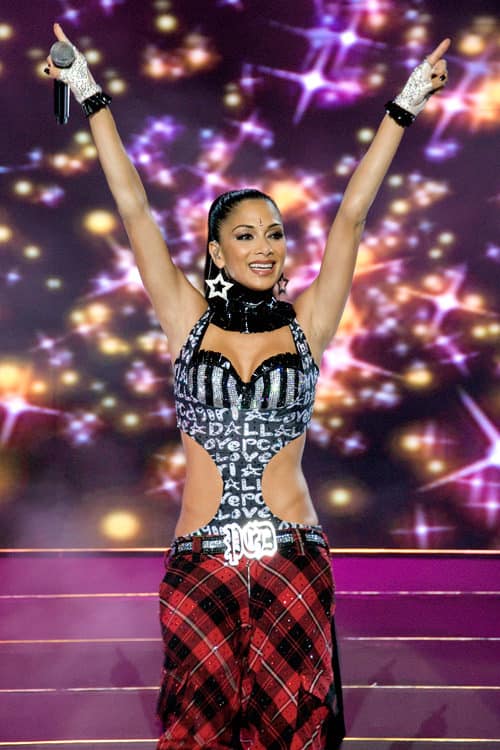
For studio work, Phase One would be my preference. On location, the new Nikon or Canon DSLR’s are almost medium format with 50 megapixels. These cameras produce optimal image quality. Depending on the brief, it would determine the camera system used. I was asked by MTV Philippines to take a few shots of Justin Timberlake. Timberland and the Pussycat Dolls in concert. Obviously, the Nikon system was the best option in this case. Justin Timberlake’s performance was absolutely incredible; I almost forgot I was there to take some pictures. Concert photography has almost the same skill set involved in fashion runway photography. The difficulty with concert photography is you have the artist giving their performance and they’re dancing around, the lights flashing off, and on, so you’re constantly composing the shot, checking your exposure and focusing. With a fashion runway, the light is mostly consistent and you know approximately where the model will be which helps. Watching the model’s feet on the runway is the key to getting a good shot. By shooting on the forward step, the rest of the shot should just fall into place.

Which photo are you currently most proud of?

It’s hard to choose just one image. My approach to portraiture is classic with a contemporary twist, focusing on the model, and how they project. Everyone’s different, so I need to coax the best possible performance from the model. Capturing the unexpected is a magical moment. I’m constantly looking for a simple graphic quality that makes the image jump off the page. When I’m behind the camera, I’m focused on achieving the best image possible. Photography is so precise, it’s about light, composition and what the photographer can bring out of the subject. It’s equally important to break the rules, and not let the technical stuff get in the way and allow the unexpected to happen.

Comparing where you are now with where you are when you first started, what could you have done differently to get to where you are sooner?

Of course, in the beginning, it’s difficult because you lack the experience, over time you gain this and begin to relax. I don’t think I would have done anything differently. You just need to be patient with yourself. I began my career shooting film, 6x7 with 10 shots on a roll and you wouldn’t know you had the shot until the film was processed. Now, with digital, you can shoot hundreds of photos on a CF card or if you’re tethered, see the results immediately. I’m not sure which is better, if you were shooting film, you’d just keep shooting not entirely knowing if you had the shot and sometimes would get a better picture by not stopping. With digital, you know when you’ve got the shot and stop, and not going that little bit further.

You’ve clearly worked with a wide range of models, what tips can you recommend to people looking to expand their portfolio?

A photoshoot is a team effort and working with a model that goes that extra mile makes all the difference. Your team around you makes the assignment work, so it’s important to have a good atmosphere during the shoot. A good relationship with the model is essential to get their best performance. It’s their performance that could make or break the photos. The less experienced models tend to over model, I’ve found less is more and it’s small nuances that make a big difference.

Describe a typical shoot.

There really isn’t a typical shoot, they all depend on the brief from the client. I was asked by a Philippine publication to shoot a runway show. After the event, they asked me to add movement to the clothes which turned out to be an interesting exercise. Normally, the photos from a runway shoot look fairly static, so adding the movement to the clothes produced some interesting images.

How much time do you spend taking photos, versus retouching photos?

I try to do as much as I can in the camera, but I still find that I spend 50% of my time processing the images in lightroom or photoshop. Sometimes I over think the image and make it too complicated than it needs to be. Again, I found that less is more and keeping it simple is the key to elegant photographs.

Favorite photography book?

Michael Langford’s ‘Complete Encyclopaedia of Photography’ was my ‘go-to’ book in the beginning. An amazing book that covered everything, it’s still a great reference for lighting and photographic techniques. It goes into depth about the old photographic processes, I learned so much from this book.

Who would you like to work with most?

I’m currently in search of agents in New York and Paris. But of course, working with Chanel, Christian Dior or Dolce & Gabbana, Condé Nast, a larger creative commission would be a ‘dream come true’


To know more about this amazing photographer, please visit: Dean Homer


Photo Credits: Dean Homer

FASHION DESIGNER CHARLOTTE ZIMBEHL

FASHION DESIGNER CHARLOTTE ZIMBEHL

Fashion Designer Charlotte Zimbehl

Charlotte Zimbehl is a fashion designer, and she was born and raised in Frankfurt, Germany. She has an extensive career in the fashion world. From creating and marketing, collections on a global scale, her understanding of the Fashion industry is amazing.

She studied Fashion at the Academy of Fashion in Munich. Zimbehl abilities were quickly focused on when she got to be an Apparel Designer for a main sport and lifestyle company. Her skills and aptitude first started inside of their worldwide Headquarter; first in the design, then in Product Marketing, this prompt to Zimbehl's placement at the company’s ‘Creation Centre’ in Shanghai, China, looking after the Greater China market.

Charlottes next job took her to London, where she continued to work for a family-owned fashion and lifestyle business, managing the fashion category for Womenswear and Menswear as well as Children’s and Accessories.

She currently lives in London and she establishes her own label in 2014. We spoke with Charlotte to know more about her label, how she started in the Fashion Business and who she is a designer.

When did you know you wanted to be a fashion designer?

Since I was small I dreamed about becoming a fashion designer. I always loved drawing and making things and I am glad I chose that path.

What’s it like being in the Fashion industry?

I love it. Amazing talents, inspiration, and aspiration. However, it’s not an easy industry to be in, especially as a young startup. It's very competitive, and there are just so many great brands out there.

How is the fashion industry in London?

Vibrant, lively, always changing and evolving. London is one of the best places to set up a fashion label and also my brand's home.

What was your first job in the fashion industry?

I worked as a Designer for the sport-inspired lines of Adidas. Loved it. Great company to work for. Still a huge fan.

How do you choose your inspiration?

Everyday life is my inspiration, London, people, great and strong females with individuality, power, and character. People I aspire to really. All those different people give each of my jackets and coats a personality and character, and my products are named after them.

In one word: how would you define yourself as a designer?

Only one word? Oh, that's difficult... I hope and would love it to be stylish:)

What advice would you pass along to those starting in the Fashion Business?

Have a vision, a clear USP, have a passion and don't get discouraged by the ups and downs that this journey and long way bring with it? I am still on the journey and excited to see where it will take me.

To know more about Charlotte and her last collection please visit: Charlotte Zimbehl


Credits:

Photographer: Gomez de Villa Boa

Model: Agnes Hedengard

BEST VENEZUELAN TEQUEÑOS RECIPE

BEST VENEZUELAN TEQUEÑOS RECIPE

Venezuelan Tequeños

Today I bring to you guys the best Tequeños or Venezuelan cheese sticks recipe. Tequeños are really special for us Venezuelans, in fact, there is no party, wedding, birthdays, or baptism, where these little bad boys are not served.

To be honest, I love them, and I could eat them every day, but I have never made them by myself, and after trying different recipes I found the best recipe and is really easy to make them.

Basically, tequeños are a piece of cheese wrapped with a crunchy and a bit sweet dough and as the most delicious things, tequeños are fried.

If you are looking for an easy recipe, this recipe is for you!

Best Venezuelan Tequeños Recipe

Incredible Venezuelan Tequeños recipe
Prep Time20 minutes
Cook Time10 minutes
Course: Appetizer
Cuisine: Venezuelan
Keyword: appetizer, Tequeños, Venezuela, Venezuelan Tequeños
Servings: 20 small tequeños
Calories: 105kcal

Ingredients

  • 2 cups self-rising flour
  • 1/4 tsp salt
  • 1/2 tsp baking powder
  • 1/4 cup water
  • 1 tbsp sugar
  • 1/4 cup vegetable oil
  • 150 gr fresh white cheese for frying
  • 1/4 cup milk
  • vegetable oil for frying

Instructions

  • Mix the flour, salt, and baking power for about 1 minute.
  • Add water, vegetable oil, milk, and sugar, and “knead” the dough for 5 minutes, or until dough is smooth and starts to pull away from the sides of the bowl. Press dough into a disc, wrap tightly in plastic wrap, and rest in refrigerator for 30 minutes.
  • Take the dough and place on a lightly floured surface. Knead with your hands until the dough is very smooth and elastic, about 2 -3 minutes. Add more flour over the surface, if necessary, and roll out into a 30 x 50 cm rectangle. Cut off the edges with a knife if necessary to make a perfect rectangle. Using a knife, or a pizza cutter, cut the dough into 2 cm wide strips lengthwise, so that you end up with 12 strips.
  • Cut the cheese block into 6 equal pieces, and then cut each piece in half lengthwise, you end up with 12 cheese sticks.
  • Take one strip of dough and cover the end of one cheese stick with dough. Continue to wrap dough around the stick in a spiral fashion, overlapping the edges, until you reach the other end. Cover the other end with dough and pinch edges close to fully seal. The cheese has to be completely covered with dough. Repeat with remaining cheese sticks.
  • Heat oil over medium heat. When the oil is hot, cook the tequeños in batches, 2 -3 at the time, turning them with until all sides are golden brown. Remove tequeños to a plate lined with paper towels.
    Enjoy!

Nutrition

Serving: 1Tequeños | Calories: 105kcal | Carbohydrates: 2.5g | Protein: 0.2g | Fat: 32g
OZ JOHN PHOTOGRAPHER INTERVIEW

OZ JOHN PHOTOGRAPHER INTERVIEW

Canadian Photographer Oz John

Oz John Tekson is a Toronto based portrait, fashion, and advertising photographer. He studied graphic design at the university and worked in advertising as an art director for 14 years in companies such as Publicis and The Coca-Cola Company. He is also an academic with a degree. He teaches in, as well. For three years, he officially runs his company on top of all things.

Were you educate in photography, or are you taught?

As opposed to the popular trend, I am proudly not a self-taught photographer. At the university, I took photography for three years, including darkroom techniques and studio lighting. I even worked with large-format view cameras back in the days. Even after I switched over the digital I took courses and attended a workshop to ensure the knowledge and the process of the digital.

My graphic design background helps me a lot in the visual aspect of photography. And, while art directing photoshoots I worked with high-end photographers and also learned a lot from them.

What camera do you use most of the time?

I own 34 cameras. Many of them are film cameras that I still own. Only 9 of them are digital. For work, I go with Nikon. I occasionally use medium format. Now, I am migrating over the medium format in my professional workflow.

Which photo are you currently most proud of?

Difficult to answer… I will not answer “the picture I haven’t shot yet”: )) Not a single one… maybe, I love the ones that have some subtle creative ideas in them. Or the ones that come from improvisation.

Comparing where you are now with where you are when you first started, what could you has done differently to get to where you are sooner?

I wish I had interned to a good photographer to learn more not just about technical skills, but also the business aspect of the profession. Since I have started as a mature apple I couldn’t get the chance to experience and enjoy that phase of the profession.

You’ve clearly worked with a wide range of models, what tips can you recommend to people looking to expand their portfolio?

We see lots of Instagram famous pseudo-models with a million followers showing off themselves and popularized by suggestive selfies. And, there are lots of beautiful girls and attractive boys out there. They look nice in pictures, but they don’t deliver much after a certain point and add to your work.

Working with agency models makes a big difference. They are mentally and professionally into what they do. They know what a professional workflow is. A professional model is an actor. They can act and create a mood you need for your images. They can be different personalities in turn.

Describe a typical shoot.

I am not sure what this question is. The word “typical” might be used if you shoot weddings or headshots, maybe. In fashion and advertising, each assignment is different.

Favorite accessory?

Again, it depends… especially, if we talk shooting. But, I can say that I spend roughly 15 mins to 2 hours for editing an image. Editing takes more time than shooting. Favorite accessory? I would say, gaffer tape. It’s a lifesaver, blessed by McGyver.

Who would you like to work with most?

I wish I shot with Helena Christensen.

Favorite photography book?

Dancers Among Us by Jordan Matter, and Dior Couture by Patrick Demarchelier.


To know more about him please visit: Oz John

AUSTRALIAN PHOTOGRAPHER CHRISTOPHER QUYEN

AUSTRALIAN PHOTOGRAPHER CHRISTOPHER QUYEN

Australian Photographer Christopher Quyen

Christopher Quyen is a photographer, writer, and movie producer situated in Sydney, Australia. He is now making a Bachelor of Communications (Journalism) / Law at the University of Technology, Sydney.

As a photographer, he focuses on the portrait, and fashion photography, recently shooting Shu Uemura and covering New York Fashion Week SS17. He also has practical experience in commercial photography, content creation, and digital marketing operating as the creative director of his creative and digital advertising company, Seakyu Creative, established by Dennon Kendall Clamp and himself in 2016. He has since created online content for organizations and new companies; for example, QNect, Dimension Data, and gentSac.

As an author, he has composed and independently published a novel titled With Watercolors (2013), composed for productions; for example, Capture Magazine and C-Heads Magazine and has been a part of the 2015 article group for UTS Vertigo Magazine/Newspaper.

As a movie producer, he produces and gives original direction for films and theater production, including his own particular short movies, Dezmond (2012), Chasing Shadows (2012) and Peter's Philia (2013).

Were you educate in photography, or are you taught?

I was never educated in photography before I was behind the camera; I was in front of it. Acting and modeling gave me a bit of insight into how photographers and filmmakers interacted with me and how they could offer creative direction to connect with me through the camera. I took this on board when I picked up the camera and ever since the connection with your subject has become extremely important to my work and me. I also picked up a little photography education by modeling for a photography school every week. While I was in the studio modeling, I would eavesdrop on the lecturers and pay close attention to how they were setting up the lights to obtain different shadows or moods. I also work at Capture Magazine, Australia’s top professional photography magazine, and could get really great advice from some of the best photographers in the world.

What camera do you use most of the time?

Right now I’m shooting on the Canon 1DX Mark II because my Sony A7R II is in repairs. I love Sony’s products, but why do they have to break so easily? Haha.

Which photo are you currently most proud of?

Right now, my favorite photo is this photo I took of a random street busker in New York playing on his saxophone. It was the first thing I saw when I walked the streets of New York after dropping off all my bags at the hotel after catching the opening melody of Stevie Wonder’s, Superstitious. I remember just stopping, just absorbed in his passion for the music. So I took my camera out and started snapping away before I knew it, he started playing to the camera, and I got this one shot that I will treasure for years to come.

Comparing where you are now with where you are when you first started, what could you have done differently to get to where you are sooner?

I would’ve done two things differently… Started younger! Also, take it more seriously during my early years! Photography is often described as a young man’s game and though I’m only 22, which is still pretty young in my books, there are plenty of photographers who haven’t even graduated High School who are killing it right now. I think if I took photography and filmmaking more seriously when I was younger, I could’ve had such a great head start.

You’ve clearly worked with a wide range of models, what tips can you recommend to people looking to expand their portfolio?

Don’t just shoot agency models. Shoot people on the street. Offer a photoshoot to your friends or to a stranger. Recognize the beauty in every person and try your best to connect and capture that with your camera. One photographer who I look up to, Steve McCurry, does just this and his portfolio is a very expansive collection of faces and emotions. Then when you start to work with agencies and models of different looks, you can always capture something new and refreshing in your photographs.

Describe a typical shoot.

My typical shoots are usually very busy and produced or very simple and spontaneous.

For the produced ones, first, off you need snacks and drinks. A lot of them. An unfed and thirsty crew is an unhappy crew, and you don’t want that. Once you’ve got that covered, I usually have the model, makeup artist, and stylist in the studio or onset. I carry all my gear in two backpacks and usually put on some music I can dance to and start setting up while the model is getting their makeup done. After I finish, I usually go back to makeup to build some kind of rapport with the model. Then, they hop in the zone and I try to connect with them and start taking photos. I try to have fun unless it’s for a client… that’s when I get really stressed and too deep in thought, but you should try to have as much fun as possible – otherwise, it feels like work.

For the relaxed ones. A model and I will just show up to a location and walk around taking photos at anything that strikes my eye. I prefer this kind of shot.

How much time do you spend taking photos, versus retouching photos?

For every photo, I take I probably spend 5 – 10 minutes retouching.

Favorite accessory?

My drone also a flash bracket to get that Terry Richardson look.

Who would you like to work with most?

Kiko Mizuhara is my number one.

Favorite photography book?

It keeps changing, but I think Landscapes with A Corpse by Izima Kaoru left a considerable impression on me and my style of photography.

To know more about Christopher please visit: Christopher Quyen  and Seakyu


Designer: Misha Collection