THE WINEMAKER NEW WINE BRAND IN AUSTRIA

THE WINEMAKER NEW WINE BRAND IN AUSTRIA

The Winemaker - New Wine Brand in Austria

There is a new Wine brand in Austria: The Winemaker. Austrian Wine is well recognized all over the world, therefore wine makes Austria a travel destination. The wine business culture in Austria boomed in the 16th century, but it is the climate and the soil that provide the ideal combination to produce the world’s finest wines.

Austria has been delivering wine for a considerable length of time with the first discoveries of wine going back to the Celts and Romans (700 BC). Another authentic case, the leader wine "Gruener Veltliner", covering 37% of Austria's vineyards today, was made in the tenth century.

Austria produces 1 % of the worldwide wine creation and 30 % of this generation is sent out. After Germany and Switzerland, the U.S. is the third greatest fare market for Austrian wine.

Austrian wine is a standout amongst the most fascinating marvels happening on the planet at this moment. The wines are founded on each great wine rundown, are welcomed by wine specialists and exceptionally acclaimed by writers. What wine pundits over the globe value the most is that Austrian wines are incredibly tasty and combine brilliantly with sustenance, making Austrian wine sheer drinking delight.

There are numerous explanations behind the exceptionality of Austrian wine and the whole of all these elements have cleared the way for the staggering quality blast over the recent decades. The Austrian vintners have all fathomed that it is so vital to effectively join customary viticulture with present-day vinification forms. The aphorism is quality without bargain and the outcome was accomplishment regardless.

The Winemaker wine is produced by the family-owned wine vineyards in the gentle elevations of the Wagram, the grapes of our Pinot Blanc and our Grüner Veltliner still be read by hand and then pressed with the utmost care.

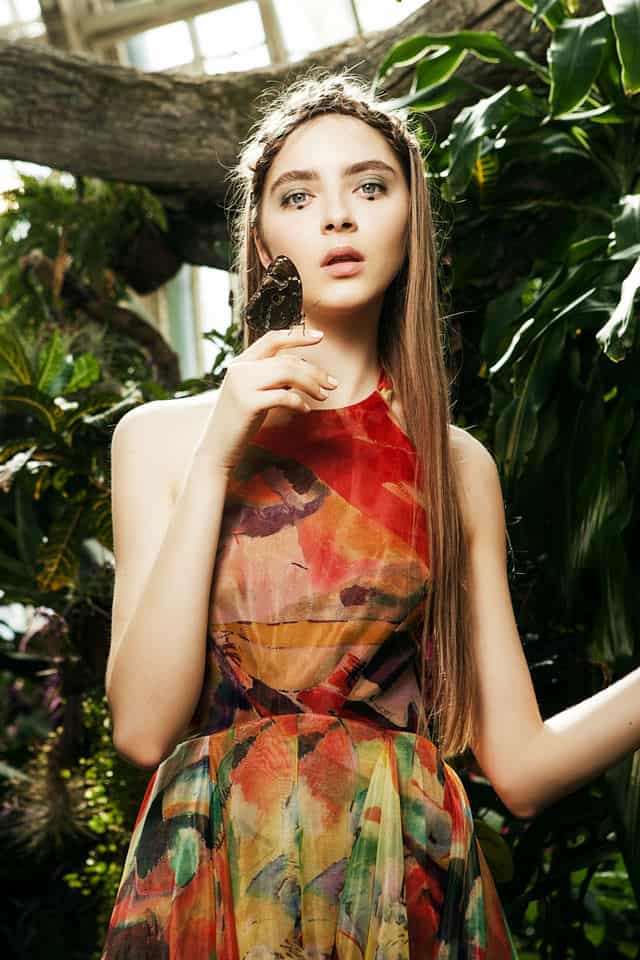
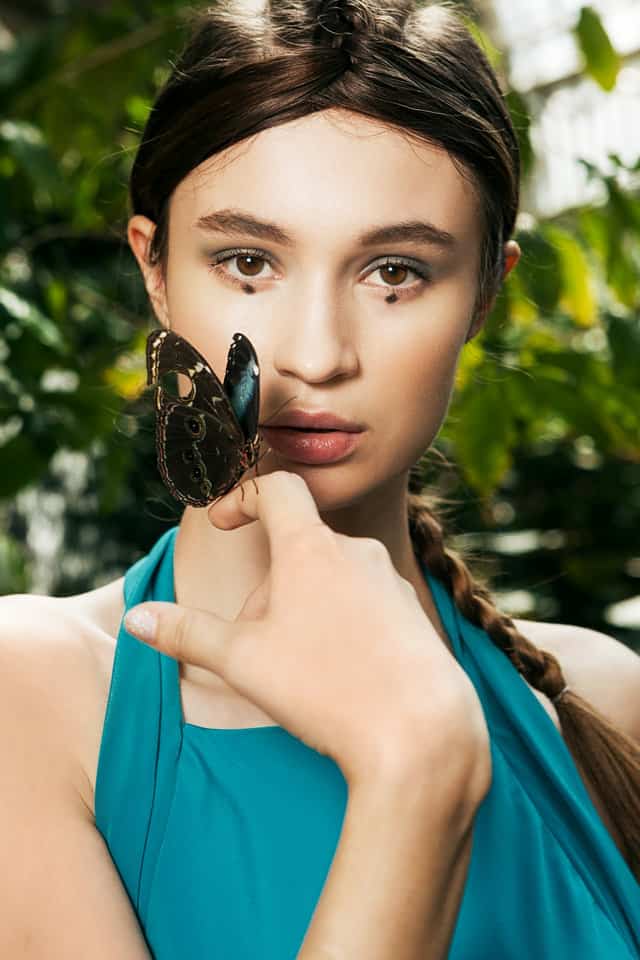
For this special post Runway, the winemaker and our fashion, of course, prepare an amazing photo-shooting to promote this exclusive wine.


Credits:

Photographer: Sigrid Mayer

Stylist Art Director: Guy Debast

Hair & Makeup: Christine Akbada

Models: Lexie & Timo / Stella Models

Fashion: Runway Vienna, Tiberius & Lemontrend

SPRING COLLECTION MAURIZIO GIAMBRA

SPRING COLLECTION MAURIZIO GIAMBRA

Spring Collection Maurizio Giambra

For a couple of weeks, we had the opportunity to assist by the spring collection of Maurizio Giambra in the Butterfly museum in Vienna.

For those of you who don’t know Maurizio, he is an Italian designer who lives in Vienna since 20 years. He studied fashion Design in Rome, but actually, this story started when he was 16 when he used to draw figurines, before even thought about fashion, till the mother of a friend told him how talented he was with the pencil, and suggested him to study fashion.

He is successful, because of his passion, moreover, he brings his feelings to the design, therefore, he concentrates only on vision and what he wants to express. His design is a mix of classic with modern style. His women are professional women who want to have quality outfits and feel elegant, strong and feminine.

His focus is to find the most elegant look possible, it doesn’t matter if is for the day-by-day look, his brides, or his evening’s gowns. He always brings the most elegant look to his clients. His inspirations are Audrey Hepburn and Grace Kelly

He brings the classic and the modern world together in each design, with a touch of avant-garde, as a result, key pieces that will remain in your closet forever.

This special photo shooting was made in the butterfly museum, with talented photographer Verena Mandragora, under the direction of Guy Debast in cooperation with Runway Vienna.

His new spring collection: Flowers never fall in love, is a beautiful collection that embraces the feminine personality of the woman. The mix of colors and fabrics makes this collection a must this season, and is dedicated to women who are not afraid of color and textures.

Where you can find this collection?

Maurizio Giambra Atelier

Lange Gasse 38

1080 Vienna

Runway Austrian Fashion Design

Goldschmiedgasse 10

1010 Vienna

For more information please visit: Maurizio Giambra and Runway Vienna


Credits:

Photographer: Verena Mandragora

Stylist: Guy Debast

Assistants: Thomas Germ, Sally Ruchman

Make-up & Hair: Christine Akbaba

Fashion: Maurizio Giambra available at Maurizio Giambra & Runway

Shoes: Natalie Rox available at Runway

Accessories: Adeline Germain available at Runway

Models: Dara & Suzanne / Stella Models

Location: Schmetterlinghaus Wien

MAY CRAVING LIST: SPRING IS HERE

MAY CRAVING LIST: SPRING IS HERE

May craving list

Spring has finally come to Vienna! and with 21 degrees today, it was impossible to stay at home. Although this week I have a lot to study and a lot of exams, after waiting so long for the perfect weather, I had to go outside for a walk.

Vienna is the perfect city to get lost because in Vienna you can find parks in the middle of the city, where you can walk and enjoy the sun, and not even hear the cars anymore.

One of the parks I love the most is Prater, because it is extremely big, and everything is super green, and just remained me, my beautiful park back in Caracas Parque del Este.

So I decide to join forces with friends, and we walked around for 2 hours, till we sit down and grab something to eat; when I notice we just walked 5 kilometers just to have fun.

Such a beautiful day like today remained me that I have to pack again all the winter clothes, and put out the summer clothes and because somehow I want a little closet fresh up! I started to look for inspiration for this spring and I put together a little craving Mai list!

For starters, I fall in love with this beautiful white blouse! and because I am crazy about the romantic white blouse, this had to be on my craving list

I also fall in love with this Roberto Collina, skirt, I think is perfect for the season, and the color is just amazing!

Tod’s Bomber jacket, I have fun mixing colors especially when is navy blue with pink, I think the match together really good, and you have a wow effect.

Even & Odd high heels, what can I said, there is never too much high heels in the closet, and this one match perfect with the rose skirt.

Michael Kors watch is just a must and I have to have it!

Prada Sunglasses, I think I have a difficult face for glasses because let's face it I face is a bit round, but these glasses are just amazing! And there perfect for my face type!

INSPIRED PERSON LOUIS MARIETTE

INSPIRED PERSON LOUIS MARIETTE

My inspired Person - Louis Mariette

Howard Darkin is an extraordinary vet, lived a fascinating life, compassionate, and intelligent 'over-opinionated 'character and yes my fantastic Dad!

Howard was born in the UK and traveled to Africa. In Malawi, he met and married my Mum Tina, nee Gomes, then Mariette. They later traveled to Swaziland and Botswana in connection with his government veterinary contracts.

  • Education at Palmers Boys Grammar School,
  • Grays, Essex
  • Glasgow Veterinary College 1962-1967


What was the initial driving force to leave the UK to go to Africa?

I was fascinated by Africa ever since watching Armand & Michaela Dennis’s safari documentaries on TV in the 50s & 60s. The opportunity to experience it for me arose halfway through the final year at College when reps from ODA (Overseas Development Administration) visited to talk about work opportunities in Africa. I jumped at the opportunity to do something different for a few years, never expecting it to extend to 21 years!

How did your Mum, Dad, and sister Ursula react?

My Dad was very understanding, my sister already had ambitions to travel overseas but my mother was very upset at the prospect of my going so far away.

What was your title, department, job requirement for the British government and relationship with the government of those countries?

I went out as a Veterinary Officer as part of the UK’s aid package. I was employed directly by the local governments, ODA/Crown Agents acting as ‘recruiting agents’. The Department of Veterinary Services within the Ministry of Agriculture in the different countries set its own agenda, depending on the local needs. Our responsibilities were to fill the skills gap until the local country had trained its own nationals to fill the posts.

What was your exact memory of the very first moment you stepped foot on African soil? What mode of transport?

I exchanged the flight I was initially booked on for a sea ticket, sailing at the end of October 1967 from Southampton to Capetown via Las Palmas, as I wanted to give myself the opportunity of a 10-day voyage to ‘acclimatize’ the different season. Arrival at Capetown was greeted by the ‘tablecloth’, a sight one never forgets. I transferred immediately to the train by the quayside for the 3 day trip to Francistown in NE Botswana, via the Great Karoo the barren nature of which, viewed through the carriage window prompted the written comment ‘what have I let myself in for?’ In Francistown, I met other new VO arrivals for our ‘induction’ into mysteries of the Vet' Department. After a couple of weeks, we were allocated our stations, I being given Ngamiland, home of the Okavango Delta.

What were your occupational experiences working with locals, as joy and challenge?

The staff I encountered everywhere were conscientious in the duties although frustrations and amusements abounded. Their choice of language was sometimes excusable only by their obvious repeating of what they had heard from their European seniors and added color to conversations!

They never refused to do anything which was reasonable but was not backward in pointing out that which was not. As the ‘outsider’ I always treated their comments seriously.

As well as your government work, tell more about your privately set up practices?

In Botswana initially, there was very little opportunity for ‘private practice’ although I remember spending many hours attending to transmissible venereal tumors in dogs, which seemed to be a very common problem. Latterly it became an important part of my routine, but always secondary to ‘official work’. In Malawi & Swaziland, it was done as part of the government duties and all proceeds went into the government coffers with the issue of official receipts. On many occasions operations were carried out in situations where serious improvisation was required to establish a safe operating environment. In Swaziland I ran a surgery from Piggs Peak in the NW at Havelock asbestos mine in a room allocated by the hospital staff next to the room where they X-rayed the miners’ chests twice a year and I also operated in the open air at the citrus estate near the SA border; in Botswana, I ran a surgery at the diamond mine at Jwaneng at the request and with the assistance of the mine management. I operated from the ’servants’ quarters’ in my last station. I was assisted by members of the family, friends and members of my staff on different occasions, for a share of the proceeds when I was able to charge privately, otherwise, regular staff members assisted at the ‘official surgeries’.

Tell us a bit more about your various clients and some of the issues you faced?

In Botswana especially where my district at one time was about the size of Wales, I would spend up to a couple of weeks in the month touring & visiting staff at their substations and the local farmers to discuss problems/needs, etc. Outside of this routine, the distances were an obvious problem to dealing with immediate problems as it could often take a couple of days between a situation arising and my attending it, with the inevitable less than satisfactory results. I particularly remember one case where a farmer reported a prolapsed uterus in one of his cows which promptly fell off in my hands-on initial examination, having been severely damaged by fly-strike.

Any particular 'oddities' within local customs?

One unfortunate ‘fixation’ of the local farmers was that the number of cattle owned was more important than their condition – 10 thin animals were worth more than 6 well-built ones. The fear of snakes was endemic, understandably so, but this even extended to dead ones, as I discovered when I asked a staff member to remove a dead snake I had forgotten & left in the office over the weekend which most forcefully reminded me of its presence on Monday morning - he flatly refused to have anything to do with it, although its pungency could have indicated nothing other than long decease.

Your most challenging operation?

I well remember being called to a cow that was having trouble calving. I was standing in for a colleague who was on overseas leave at the time and I attended with our eldest son, Chris, what I thought would be a routine problem. The cow was penned in a small ‘kraal’ strewn with obstacles but with no other more suitable site available. It took little time and some anguish to establish that the cow was not of the obliging type, noticeably involving my being pinned on my back to a rusty bedstead with the animal’s forehead on my chest and a large horn either side. Chris having ably relieved my predicament we then used the bedstead to restrain her. It took a brief internal assessment to realise that a caesarean was necessary. Local anaesthetic obviated the subject’s further potential distress and the operation proceeded without incident; the other circumstances surrounding the episode have blanked my memory as to the fate of the calf! My colleague returned from leave a few days later and I felt obliged to apprise him not only of the operation performed and the need to remove the skin sutures but of the temperament he might face. I enquired later as to how he had fared, to be told that the sutures were still place, followed by a list of expletives of which I am sure not even he thought he was capable!

How do you handle emotional situations like having to put down an animal?

It depended entirely on the circumstances. The case of an animal being put down for the ‘owner’s convenience’ would always upset me enormously and I would try to dissuade the owner, discuss alternatives etc, almost invariably without success as such a mind is essentially unapproachable. In the case of an animal suffering with no hope of relief I would try to mitigate the owner’s own distress by emphasising that this was last service they could provide for a well loved pet/companion. It perhaps goes without saying that I have the same attitude to human life, and death!

You had some very seriously intense disease control problems and hurdles to overcome, tell us more, the region covered?

When I first arrived in Botswana 90% of the country’s income derived from cattle and the meat export market, principally to Europe, centred on the BMC abattoir in Lobatse in the SE. Foot and Mouth Disease (FMD) was a serious threat to this and the most important task of the department was its control through annual vaccination campaigns in the danger areas, especially associated with the buffalo in the swamps, with a vaccine especially developed against the prevalent sub-type, and movement controls through quarantine camps and cordon fences. In addition, vaccination campaigns were carried out against Anthrax and Blackquarter, the former especially being a serious threat to humans. In Malawi and Swaziland, whilst Foot and Mouth Disease  was something of a threat in small areas, the main function of the department was tick control through the weekly dipping of all cattle which required the monitoring of the dip concentration etc. The initial use of Arsenic carried its own potential risks and precautions!

What was the most unusual animal and for what reason did you treat them?

My routine work did not involve wild animals, although spending so much time in the bush in Botswana brought me in regular contact. Otherwise the most unusual I suppose involved my regular castration of police camels at Tsabong & Werda on the Molopo river border with RSA; their use was necessitated by the nature of the sand and dunes making vehicles impractical for routine patrol. Castration made them more amenable.

What are your happiest, saddest , challenging memories performing an operation?

One of the most satisfying was that of a horse which reared up and came down on a water stand pipe, creating a massive wound in the axilla; it required the assistance of a colleague, who regularly topped up the intravenous anaesthetic, and two hours of carefully suturing muscle layers and skin to return the animal to eventual full function. An equally challenging case , but with a less happy end, was that of a dog caught by a crocodile, which had been rescued by its owner and rushed to me. 2 hours later, after carefully repairing the extensive area of damaged muscle and skin the animal succumbed to the shock with only a few skin sutures left and recovery in sight.

Your most awkward moment?

One most unfortunate incident was that of SBT kennelled whilst the owners were on overseas leave. It escaped one day whilst I was away in bush, and was found and returned to its kennel. The following day a python was found in the kennel with a dog shaped & sized swelling in it. It was killed but the dog, which had obviously seen its previous efforts to enter through the open top via an overhanging tree, was long dead.

What were the challenges working out on bush locations?

I cannot recall thinking of any ’challenges’, depending on your definition. I looked forward to my bush trips, the main pleasure being that they were almost invariably done to my own timetable and in my own way, without outside ‘interference’, with the exception of FMD campaigns. There were, of course, the official ‘expectations’ but how one performed them was largely one’s own decision, bearing in mind one needed to justify the mileage claim at the end of the month! I carried 400 litres of petrol, 200 litres of water, 2 spare tyres plus tyre changing equipment , a book to read, pen and paper and full camping gear whenever I went out, not forgetting the all-important shovel of many uses. I got stuck in the desert twice which was frustrating but it was always certain that someone would come past even if it meant waiting a couple of days. I took with me a guide cum cook cum translator who could also be very interesting company. The weather was a regular concern – a river could be dry on the way out and a raging torrent on the way back, not to mention the roads! A camp at night could attract people one would never have imagined were around – from casual ‘locals’ popping in for a chat to expats in the nearby school inviting one for dinner.

Tell us more on your involvement within the local communities.

My bush trips usually involved contact with the local communities, either at the veterinary crush where vaccinations were carried out or the dip tanks. The farmers would congregate here and it was often a useful place for informal contact, even though I was obliged to use a translator! However, since these were times and places of fairly intense activity matters of more import were discussed at more formal meetings in the villages when there were no other distractions. Matters of government policy or of immediate concern such as drought or Rabies for example were raised, as well as providing the opportunity to listen to the farmers’ own concerns.

Your proudest moment?

The memory which gives me the greatest pleasure concerns a project I developed and wrote up as a paper presented to a forum which a friend and I had established some time before and which on that occasion included the PS Min of Ag and a local progressive farmer who was a friend of mine. I had long been concerned about the water supply situation in the western part of my district with too many cattle concentrated around too few boreholes and the inevitable destruction of the fragile savannah. I persuaded Geological Survey to survey the area and identify potential new boreholes, without subsequent exploitation – it would be necessary to ensure one did not merely extend the existing problem before development could take place. This could only be done by establishing fenced farms on what was communal tribal grazing land. Such was the substance of the paper I wrote with some statistical assistance from a Peace Corps friend. Some time later I eventually left Botswana. When I returned 10 years later I found the Tribal Gazing Land Policy in the area I had written about was in operation and was told by my local farmer friend that it was a direct result of my paper, all the research for which I had done outside my expected duties, in the more than sufficient unfilled time the performance of those duties allowed.

Your view on environment of the planet?

The most dangerous animal on the planet is man, whose intelligence has not kept pace with his increased ‘cleverness’. His ability to think long term about the planet when faced with immediate problems is severely limited, especially when handicapped further by the short term of political motivation. The single most dangerous aspect of this is the blindness to the fact that a finite resource, the space available on the planet suitable for habitation (by all of the flora and fauna needing it), cannot support the infinite potential of human population growth. To ignore this simple fact requires a blindness, wilful or otherwise, of frightening proportions.

Name your chosen charities.

WWF

Woodland Trust

Gorilla Organisation

Although I am a Rotarian you will note that I have included no ‘human’ charities: whilst I support and sympathise with efforts to enhance human well being and reduce human suffering I cannot support anything which has the potential to increase human population!


by Louis Mariette

BENEFIT CONCERT IN VIENNA FOR AUTISM

BENEFIT CONCERT IN VIENNA FOR AUTISM

Virtuoso musicians will give everything for Autism

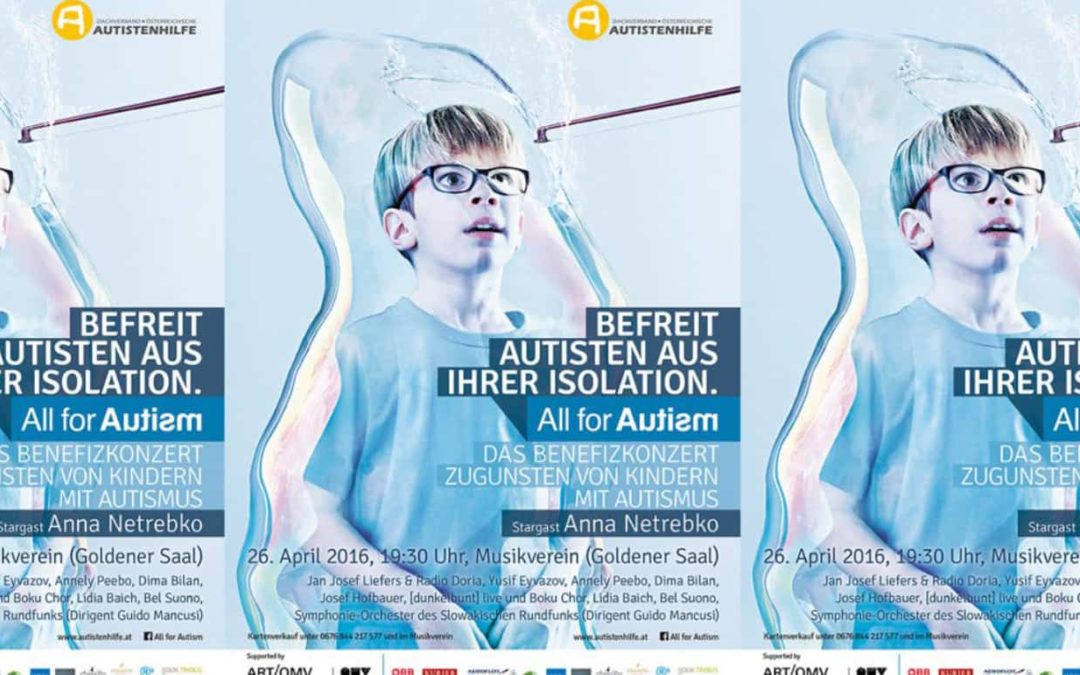
This Thursday, virtuoso musician will give all for children with Autism; organize and supported by the former opera singer and music agent Irina Gulyaeva this Thursday 26 of April at the Vienna Musikverein, this beautiful concert for an important cause will take place at the Golden Hall.

This year Jan Josef Liefers and Radio Doria, Yusif Eyvazov, Annely Peebo, Dima Bilan, Josef Hofbauer, Lidia, Bel Suono and the Symphony Orchestra of the Slovak Radio led by Guido Mancusi in our favor on. Anna Netrebko will bring with her guest appearance the evening a grand finale.

This amazing night benefits the new therapeutic and diagnostic center of the umbrella organization of the Austrian autistic assistance. Our president, Jutta Steidl, adopting its thanks for the recurring charity event in the following words: "In the name of the umbrella organization Austrian autistic help affected children and their families, I thank the organizer of this concert, Ms. Gulyaeva, and all artists sincerely for their support! Your helpfulness was easier for many children with autism access to needed urgently, early-onset and quality of life tremendously improving autism therapies such as ABA and TEACCH. The targeted and customized support prepares affected children to independent living and contributes to our main goal - the inclusion of persons with autism spectrum disorders -. Decisively "

Autism spectrum disorders and new therapeutic and diagnostic center Autistic people take their environmental "different" true. Often they are based on details, search for rare eye contact and recognize other people's moods from their facial expressions barely. Over- or under-sensitivity to light, smell, noise or touch are common. These and other cognitive disorders and difficulties cause children or adults with autism have problems understanding their environment as a meaningful whole. Sufferers find it hard to empathize with their lives and build adequate relations with them. Your learning opportunities are affected. In most cases, the symptoms are already visible in the first three years of life.

Every autistic child is different, but they all learn, as opposed to children with healthy development, not "passing". Therefore, they need early and personalized support where learning content is parsed into simple learning elements and shall progressively. Early and intensive promotion allows autistic children to learn behaviors that help themselves and hence their increasing independence allows.

Today, experts agree that autism therapies begin as early as possible and should be carried out in high intensity/frequency. In the US, for example, for up to 6 hours per day promotion is considered. In addition to the TEACCH method (Treatment and Education of Autistic and related Communication handicapped Children), Applied Behavior Analysis (ABA) is considered the most scientifically currently most secure method for the treatment of autism spectrum disorders. Numerous studies have shown that using ABA therapy to reach at least half of all children treated a normal level of functioning and can be integrated into mainstream schools with no or minimal assistance.

In Austria, there are still huge gaps in the diagnosis, early intervention, and treatment of autistic children. Autism Specific therapies such as ABA and TEACCH are not covered by health insurance and have to be financed by the affected families. Many children are not adequately treated due to a lack of specialized personnel or have to wait for their treatments very long. The so crucial for early intervention early development phase will pass quickly and often unused. Children Inadequate and late-treated often require lifelong, associated with high costs in care institutions.

The new therapeutic and diagnostic center of autistic Help is committed to providing much-needed state of the art therapies and to train therapists in this internationally established and highly successful forms of therapy itself. How effectively the ABA therapy effect, has already been shown in the context of our EU project "Autism Competence Exchange". A first milestone has been reached with the training of professionals. The now necessary next step is to offer these therapies a broader range of affected children aged 2 to 6 years.

If you want to support is this great initiative and help children with autism, you cannot miss this concert.

The artist for this night will be:
Jan Josef Liefers and " Radio Doria "
Yusif Eyvazov
Annely Peebo
Dima Bilan
Josef Hofbauer
Lidia
Bel Suono
Symphony Orchestra of the Slovak Radio led by Guido Mancusi
Guest Appearance: Anna Netrebko

Place:
Musikverein, Golden Hall
Musikverein Platz 1, 1010 Vienna

Date and Time:
04/26/2016, 19:30

Advance tickets:
Musikverein
Musikverein Place 1
1010 Wien
Online: Book Tickets here
Email: [email protected]

Donations account:
IBAN: AT80 2011 1000 0542 6553
BIC: GIBAATWWXXX
Reference: ALL FOR AUTISM 2016

Credits: © Robert Staudinger